
Corporate Social Responsibility (CSR) has become a defining element of responsible business. Organizations are expected not only to invest in social initiatives but also to demonstrate measurable outcomes, maintain transparency, and ensure compliance with evolving regulations. As CSR portfolios grow, managing projects through spreadsheets and manual documentation becomes increasingly inefficient.
This is why organizations are rapidly adopting CSR software. A dedicated CSR platform helps businesses digitize and automate their CSR operations, enabling better project execution, stronger governance, improved reporting, and data-driven decision-making.
Whether your organization supports education, healthcare, environmental sustainability, skill development, or employee volunteering, the right CSR software can simplify management while helping you maximize social impact.
The Growing Need for Digital CSR Management
CSR has evolved significantly over the past decade. Earlier, companies primarily focused on philanthropic activities and annual donations. Today, CSR has become a strategic function linked to sustainability, ESG goals, stakeholder engagement, and long-term business value.
Managing multiple CSR initiatives involves coordinating several moving parts, including budgets, implementation partners, beneficiaries, field teams, compliance requirements, and impact assessments. Without a centralized system, organizations often face delays, inconsistent reporting, and limited visibility into project performance.
Digital transformation has changed how businesses operate, and CSR management is no exception. Modern CSR software enables organizations to replace fragmented workflows with a single platform that supports planning, execution, monitoring, and reporting.
What Is CSR Software?
CSR software is a technology solution designed to help organizations efficiently manage every stage of their Corporate Social Responsibility programs. Instead of relying on multiple spreadsheets, emails, and standalone tools, companies can oversee all CSR activities from one centralized dashboard.
A typical CSR platform supports:
Project planning and execution
Budget allocation and expense tracking
NGO and partner management
Grant administration
Employee volunteering
Beneficiary data management
Monitoring and evaluation
Compliance reporting
Impact measurement
Executive dashboards
This integrated approach helps organizations improve operational efficiency while maintaining complete visibility into every CSR initiative.
Why Manual CSR Management Creates Challenges
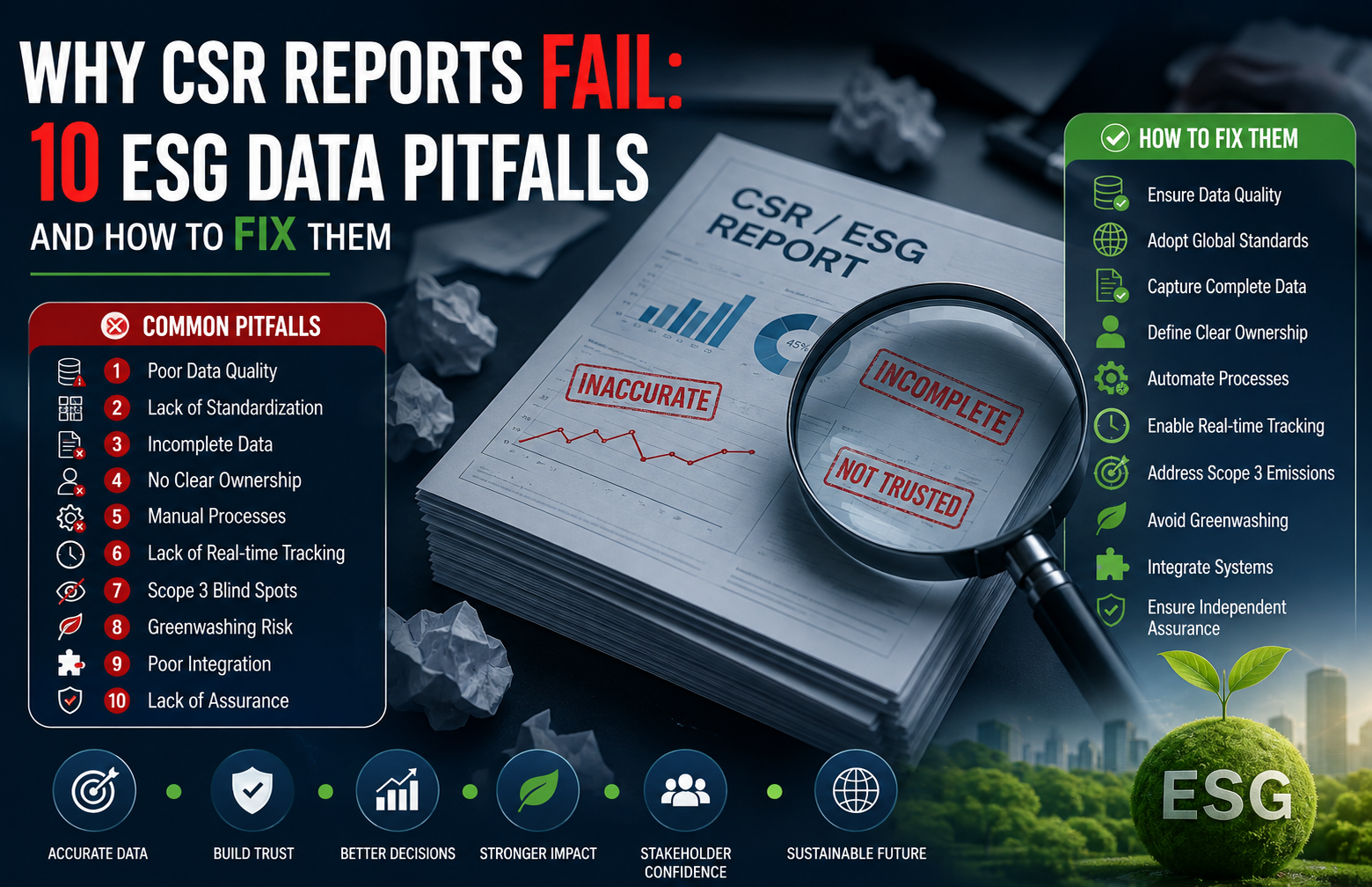
Many organizations still depend on traditional methods to manage CSR programs. Although spreadsheets may seem sufficient initially, they quickly become difficult to maintain as projects increase in size and complexity.
Some common issues include:
Scattered project information
Duplicate data entry
Delayed reporting cycles
Limited collaboration between teams
Difficulty tracking budgets
Incomplete audit documentation
Challenges in measuring long-term impact
Manual processes also make it difficult for leadership teams to access real-time information needed for strategic decision-making.
Essential Features of CSR Software
Comprehensive Project Management
A successful CSR initiative begins with proper planning. CSR software enables organizations to define objectives, assign responsibilities, establish timelines, and monitor project progress throughout the implementation cycle.
Centralized project tracking helps teams stay aligned while improving accountability.
Budget and Financial Monitoring
Financial accountability is fundamental to effective CSR management.
CSR software enables organizations to:
Allocate budgets across projects
Monitor expenditure
Track fund utilization
Compare planned versus actual costs
Generate financial reports
This helps finance and CSR teams maintain better control over resources.
NGO and Implementation Partner Management
Most CSR initiatives involve partnerships with NGOs and community organizations.
Managing these relationships manually often leads to scattered documentation and inconsistent communication.
CSR software centralizes partner information by maintaining:
Organization profiles
Legal documents
Project agreements
Performance history
Compliance records
This improves collaboration while simplifying partner evaluations.
Grant Lifecycle Management
Organizations that provide grants need efficient processes for application review, approvals, fund disbursement, and progress tracking.
Grant management modules automate these activities, ensuring greater transparency and reducing administrative workload.
Volunteer Program Management
Employee volunteering has become one of the most visible aspects of CSR.
CSR software helps organizations:
Publish volunteering opportunities
Manage registrations
Track participation
Record volunteer hours
Measure employee engagement
Generate participation reports
This encourages greater involvement while providing measurable engagement metrics.
Beneficiary Tracking
Capturing beneficiary information accurately is essential for understanding program reach and effectiveness.
CSR software enables organizations to maintain beneficiary profiles, monitor demographics, collect field data, and evaluate outcomes over time.
Measuring Outcomes Instead of Activities
Modern CSR emphasizes impact rather than simply reporting activities.
Instead of measuring only:
Money invested
Events conducted
Beneficiaries reached
Organizations increasingly evaluate:
Educational achievements
Employment generation
Improved healthcare access
Women's empowerment
Environmental restoration
Community resilience
CSR software supports this shift by enabling organizations to define measurable indicators, monitor progress continuously, and generate evidence-based impact reports.
Supporting Better Governance
Good governance depends on reliable information.
CSR software creates a transparent operating environment where every activity is recorded digitally.
Organizations benefit from:
Complete audit trails
Document version control
Role-based approvals
Centralized communication
Secure document storage
These capabilities improve accountability while reducing operational risk.
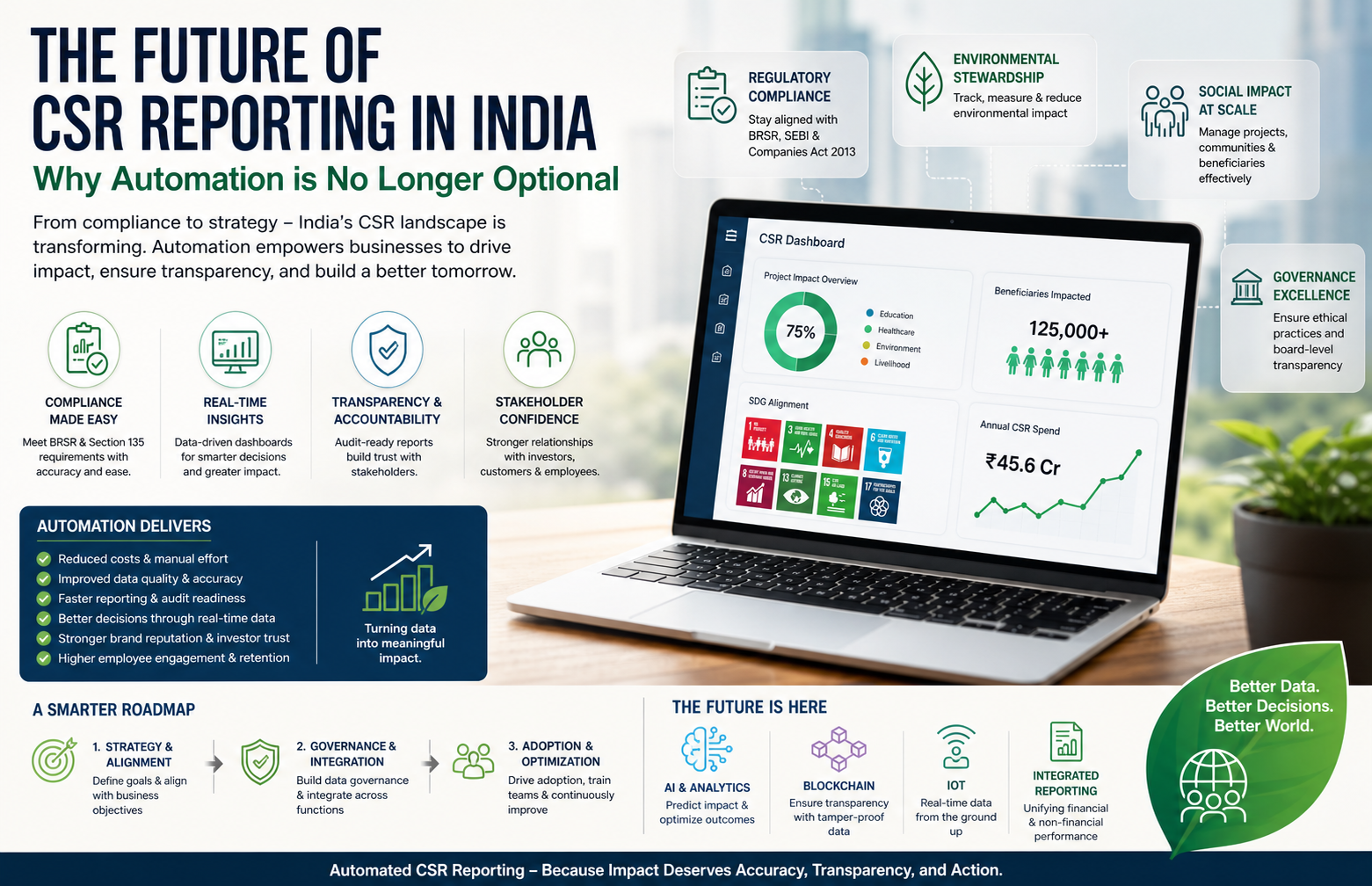
Regulatory Compliance Made Simpler
CSR compliance requires maintaining accurate financial records, project documentation, utilization reports, and supporting evidence.
Manual record-keeping often increases the risk of missing important information during audits.
CSR software simplifies compliance by:
Digitizing documentation
Maintaining historical records
Tracking approvals
Recording expenditures
Automating compliance reports
Organizations can prepare regulatory submissions more efficiently while improving reporting accuracy.
Major Benefits of CSR Software
Greater Operational Efficiency
Automation reduces repetitive administrative work, allowing CSR teams to dedicate more time to strategic planning and stakeholder engagement.
Improved Data Accuracy
Centralized data collection minimizes duplication and reduces manual entry errors.
Reliable information leads to better reporting and stronger decision-making.
Real-Time Visibility
Interactive dashboards provide immediate insights into project progress, budgets, beneficiary reach, and implementation status.
Leadership teams no longer need to wait for periodic reports.
Better Collaboration
CSR programs often involve multiple departments, implementation partners, auditors, and community organizations.
A centralized platform enables everyone to work with the same information.
Stronger Accountability
Every transaction, approval, and project update is automatically documented, making audits and internal reviews much easier.
Choosing the Best CSR Software
Not every platform offers the same capabilities.
Organizations should evaluate software based on their operational requirements rather than simply comparing feature lists.
Assess Current Needs
Begin by identifying your organization's priorities.
For example:
Project management
Grant administration
Volunteer engagement
Impact measurement
ESG reporting
Compliance management
A clear understanding of business needs helps narrow the selection process.
Ensure Future Scalability
CSR initiatives often expand across new geographies, programs, and beneficiaries.
The chosen platform should support organizational growth without requiring major system changes.
Prioritize User Experience
Adoption depends on usability.
Look for software with:
Simple navigation
Intuitive dashboards
Mobile compatibility
Easy report generation
Minimal learning curve
A user-friendly platform improves employee adoption.
Integration Capabilities
The platform should integrate with existing enterprise systems, including:
ERP
HR software
Accounting systems
Payroll
CRM
Business intelligence tools
Integrated systems improve efficiency while eliminating duplicate work.
Security and Privacy
CSR platforms often store confidential organizational and beneficiary information.
Look for:
Role-based access
Multi-factor authentication
Data encryption
Cloud security
Regular backups
Audit logs
Strong security safeguards sensitive information.
Reporting Flexibility
Reporting requirements vary across organizations.
Choose software capable of generating:
Executive dashboards
Board presentations
CSR committee reports
ESG reports
Impact assessments
Regulatory documentation
Customizable reporting reduces manual effort significantly.
Emerging Technologies in CSR Software
Technology continues to reshape CSR management.
Artificial Intelligence
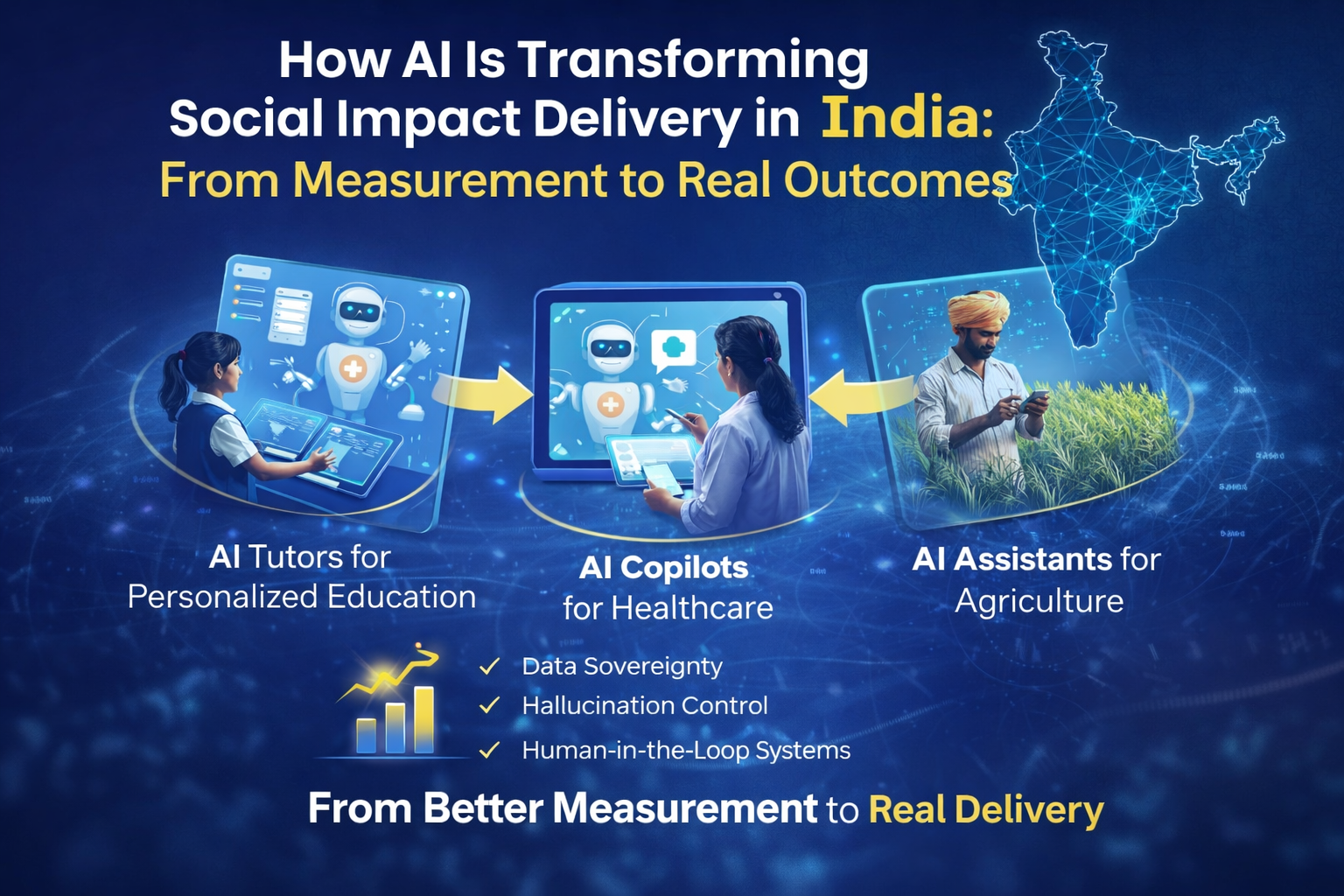
AI helps automate reporting, identify project risks, analyze large datasets, and recommend performance improvements.
Mobile Applications
Field teams increasingly use mobile devices to capture beneficiary information, project updates, attendance, and survey responses in real time.
Predictive Analytics
Advanced analytics help organizations forecast project outcomes and optimize future CSR investments.
Cloud Collaboration
Cloud-based platforms enable seamless collaboration across departments, implementation partners, and geographic locations.
ESG Integration
Many organizations now manage CSR and ESG initiatives through a single integrated platform, simplifying sustainability reporting and governance.
Why CSR Software Is a Long-Term Investment
Implementing CSR software is not simply about replacing spreadsheets.
It enables organizations to:
Improve governance
Increase transparency
Enhance stakeholder confidence
Strengthen compliance
Reduce administrative costs
Measure long-term impact
Support strategic decision-making
As organizations expand their CSR commitments, technology provides the foundation needed to scale programs effectively while maintaining accountability.
Final Thoughts
Corporate Social Responsibility has become an essential component of sustainable business growth. Organizations are expected to deliver measurable outcomes, maintain accurate reporting, and demonstrate responsible governance. Meeting these expectations requires more than manual processes—it requires technology that can simplify operations and generate meaningful insights.
CSR software empowers organizations to manage projects more efficiently, collaborate effectively with partners, monitor performance in real time, and demonstrate measurable impact through reliable data. By selecting a platform that is scalable, secure, and easy to use, businesses can strengthen compliance, improve decision-making, and maximize the value of every CSR investment.
As CSR continues to evolve alongside ESG and sustainability initiatives, organizations that embrace digital CSR management will be better positioned to create lasting value for communities, stakeholders, and the business itself.


Write a comment ...